
The question for the next 20 years is not whether India can become a $5 trillion or $10 trillion economy. Those are attractive targets, but the real question is whether India can create enough productive jobs, educate its children properly, make its cities liveable, and give hundreds of millions of people a substantially better life, asserts Ramesh Menon.

Indian benchmark indices Sensex and Nifty experienced declines due to a sharp rally in crude oil prices, continuous foreign fund outflows, and geopolitical uncertainties. Regulatory developments in the banking sector, particularly the implementation of the Expected Credit Loss (ECL) framework, also contributed to the selling pressure.

Indian equity benchmark indices Sensex and Nifty surged significantly in early trade, mirroring a global market rally and a drop in crude oil prices below USD 100 per barrel, driven by renewed hopes of diplomatic engagement between the US and Iran.

Asian Development Bank (ADB) on Friday warned that India's limited crude oil reserves of about 100 million barrels - sufficient for only 40-45 days of consumption - leave the country particularly vulnerable to supply disruptions through the Strait of Hormuz amid the ongoing war in West Asia.

Iran blames the US for 'maximalism' and 'shifting goalposts' leading to the collapse of the Islamabad talks.

A potential US-Iran peace deal, expected to be signed on June 19, is anticipated to ease geopolitical stress and benefit various sectors, particularly in India, with analysts suggesting investors await finer details before making significant moves.

Delegations from the US and Iran have arrived in Islamabad for talks aimed at resolving the conflict between the two nations, following a ceasefire brokered by Pakistan. The negotiations are being closely watched due to their potential impact on regional security and global diplomacy.

The US has temporarily permitted India to accept Russian oil already on ships to ensure energy supplies amid the conflict with Iran. This short-term measure is not expected to significantly benefit Russia financially.

The US has granted India permission to buy Russian oil already in transit to ease global supply pressures amidst the West Asia conflict. This decision comes after India agreed to halt sanctioned Russian oil purchases and substitute them with US oil.

The luxury carmaker plans to drive growth through local assembly of the MINI Countryman, expansion into 10 new cities and a broader product portfolio.

The Reserve Bank of India (RBI) has projected a 6.9 per cent GDP growth for the current financial year, citing concerns over commodity prices and supply chain disruptions stemming from the West Asia crisis.

Nayara Energy, India's largest private fuel retailer, has reduced petrol prices by Rs 5 per litre and diesel by Rs 3 per litre nationwide, marking the first such cut in over two years. This reduction follows easing tensions in West Asia and stabilised international crude oil prices, though public sector retailers have not yet followed suit.

Brand USA, the destination marketing organisation for the United States, has launched a new social-first series called 'More to Love'. This campaign aims to leverage the success of the FIFA World Cup 2026, which was hosted across the US, Canada, and Mexico, to encourage international fans to return and explore more of the country's diverse attractions, including its national parks and various states. The campaign is being amplified globally, including in India.

'A balance had to be struck between the economic cost of taking action at this point against the need not to fall behind the curve in controlling inflation and anchoring inflation expectations.'
S&P Global Ratings has increased India's GDP growth forecast for the next fiscal year to 7.1 per cent, citing private consumption, investment, and exports as key drivers. However, the agency also cautioned that the conflict in the Middle East could strain India's fiscal position due to higher energy prices.

S&P Global Ratings projects India's economic growth to slow to 6.6 per cent in FY27, down from 7.7 per cent in FY26, citing energy stress and a potential sub-par monsoon.

US Secretary of War Pete Hegseth on Friday claimed that Iran's new supreme leader, Ayatollah Seyyed Mojtaba Hosseini Khamenei, is "wounded and likely disfigured" in strikes by the US on the country.
Indian investors have seen their wealth erode by a staggering Rs 16.77 lakh crore over four trading sessions, as the markets faced deep losses driven by elevated crude oil prices, geopolitical tensions, persistent foreign fund outflows, and a record-low rupee.

Fathali further stated that Tehran has instructed its embassy in India to facilitate the Indian government, ensuring smooth operations amid the ongoing regional conflict.

The Indian rupee depreciated by 32 paise to close at 92.83 against the US dollar, influenced by escalating global tensions, particularly the US-Iran conflict, and the deadline for the RBI's instructions to banks to curb overnight positions.

After four consecutive months of outflows, foreign portfolio investors (FPIs) have turned net buyers in Indian equities in July, investing over Rs 15,157 crore, driven by improving domestic macroeconomic indicators, a stable rupee, and better global risk sentiment.

'Markets never fully lose hope. But an important shift could come if the Strait remains closed -- moving from high prices to no prices.'

Petrol price has been increased by 87 paise in Delhi from Rs 98.64 to Rs 99.51 per litre. Diesel rates have gone up by 91 paise from Rs 91.58 to Rs 92.49.

India's retail inflation rose to 4.38 per cent in June, driven primarily by costlier food items, pushing it above the Reserve Bank of India's median target of 4 per cent for the first time under the new series.

Fitch Ratings forecasts a 9 per cent aggregate revenue increase for rated Indian corporates in the current fiscal year (FY27), a stronger outlook compared to the 5 per cent estimated for FY26, which is expected to keep credit metrics stable despite potential global and domestic challenges.
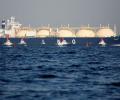
Analysts predict India will face oil price volatility and macroeconomic effects due to the escalating Iran crisis, though the country's oil supply chain is not yet structurally insecure.

'The fundamental issue that I have raised, how come India's GDP in current prices went down from Rs 86 lakh crore down to Rs 80 lakh crore -- a staggering erasure of Rs 6 lakh crore. This disappearance of Rs 6 lakh crore has not been answered by anyone.'

'Wages have not risen. Rural wages have stagnated. The growth was 0.7 per cent last year. For casual and irregular labour, the wage growth is negative.'

India Inc's first-quarter earnings season was significantly impacted by the West Asia conflict, leading to rising costs, calibrated price increases, and margin pressures across various sectors including FMCG, automotive, steel, and cement. Companies are implementing price hikes to protect profitability, with many anticipating further escalations if input costs remain elevated.

A prolonged supply shock can transmit to lower incomes, and dampen confidence and sentiment, warns Aditi Nayar, chief economist, head-research and outreach, ICRA.
Meta has partnered with Reliance Industries Ltd (RIL) to construct its first AI-powered data centre in India, a 168-megawatt facility located in Jamnagar, marking a significant milestone in Meta's global infrastructure expansion and deepening its strategic partnership with Reliance.
Indian markets on Dalal Street rallied sharply as easing tensions in the US-Iran conflict and stable oil prices boosted sentiment. Track Nifty 50 and BSE Sensex performance and key global triggers.

Despite aggressive expansion, India's solar power sector faces significant hurdles from rising regional disparities in installed capacity and a looming manufacturing glut due to overcapacity in domestic solar equipment production, potentially leading to consolidation and pricing pressures.

The Reserve Bank of India (RBI) is widely expected to keep its benchmark repo rate unchanged in the August monetary policy review, with economists citing elevated inflation risks and the pending closure of the FCNR(B) deposit scheme as key factors. Most anticipate a 'Neutral' policy stance but with a hawkish tone due to geopolitical tensions, high crude oil prices, and an uneven monsoon.

FPIs have already withdrawn Rs 2.6 trillion from Indian equities in 2026, exceeding the outflows recorded in any previous full calendar year.

Foreign Portfolio Investors (FPIs) withdrew Rs 49,340 crore (USD 5.16 billion) from Indian equities in June, driven by global risk aversion, a preference for developed markets, soaring US bond yields, and stretched domestic valuations, bringing total withdrawals to Rs 2.7 lakh crore so far in 2026.

Pakistan's Defence Minister Khawaja Asif has indicated that further Iran-US negotiations are anticipated soon, following talks in Pakistan. Despite initial optimism, the previous round of negotiations did not result in a lasting peace agreement.

Indian benchmark equity indices, Sensex and Nifty, extended their rally for a fifth consecutive session, driven by optimism surrounding a potential US-Iran peace deal and a significant drop in crude oil prices. Despite hawkish remarks from the US Fed, investors remain hopeful that easing energy prices could temper inflationary pressures.

Goldman Sachs has materially lowered its earnings growth forecast for Indian companies by a cumulative 9 percentage points over the next two years.

Maruti Suzuki India (MSIL) reported a 9.1 per cent year-on-year decline in net profit for the April-June quarter of 2026-27, marking its second consecutive quarterly fall. This dip occurred despite a significant 29.3 per cent jump in sales volume, primarily due to escalating commodity prices, increased energy costs, and logistics disruptions stemming from the West Asia conflict.
